Pipe Bursting in La Verne.
Replace the line with less surface disruption.
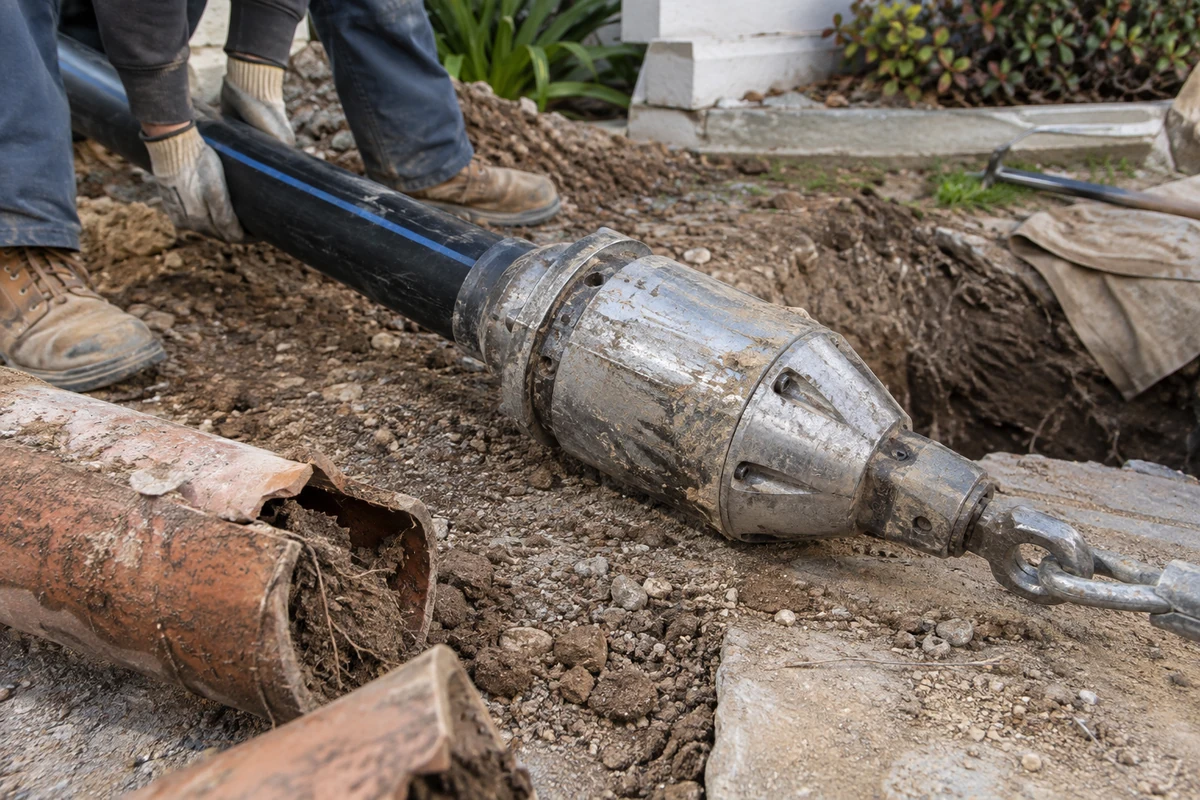
Where conditions allow, pipe bursting replaces an old sewer line by pulling a new pipe along its path.
THE RIGHT APPROACH
Plan access before replacing the line
Pipe bursting breaks apart an existing pipe while drawing a replacement pipe into position. It is a trenchless replacement option for suitable lines. The team evaluates access, nearby utilities, the existing route and project requirements before recommending this method.
- Replacement of suitable underground sewer lines
- Assessment of entry and exit access
- Project-specific scope and estimate
Local service, planned for your property.
SoCal Rooter & HydroJet is based in La Verne and serves nearby communities including San Dimas, Claremont, Pomona, Glendora and Upland. Check the complete service area and contact our team to confirm availability at your address.
When you call, describe the issue, the fixtures affected and any earlier inspection or repair. We review the conditions, explain suitable options and discuss the estimate before work proceeds. Online requests require office confirmation.
WHAT TO EXPECT
6 Pipe Bursting questions,
answered.
Will you need access pits?
Pipe bursting normally needs access points. Their size and location depend on your property and the line.
Which sewer lines are suitable for this replacement method?
Suitability depends on site conditions, utilities, pipe material and the route. These must be assessed before a replacement method is recommended.
Is pipe bursting a repair or a replacement?
Pipe bursting is a replacement method. It installs a new pipe along the route of the existing line. CIPP lining is a different approach that rehabilitates a suitable existing pipe from within.
Why do access and nearby utilities matter for pipe bursting?
Pipe bursting needs a workable plan for reaching the existing sewer and positioning the replacement equipment and pipe. The assessment considers the route, entry and exit locations, nearby utilities and the condition of the property above the line. Tell the team about known underground work, additions, retaining walls or previous utility repairs, and share available plans. Do not assume that a route shown on an old drawing matches the present conditions. Ask how the proposed access locations were chosen and what information still needs verification. The goal is to understand whether this replacement method is practical before committing to it, including any localized excavation or alternative method the site may require.
How does a pipe bursting project move from assessment to completion?
The project begins with evaluating the existing line and deciding whether bursting is suitable for its route and surroundings. The proposed scope then identifies access, the replacement section, connections and restoration needs. Before work starts, discuss the planned sequence, any applicable inspections and when affected plumbing will be unavailable. During the work, unexpected conditions should be explained along with their effect on the proposed approach. At completion, ask how the replacement was checked and what project records are available. This is a general planning sequence, not a fixed schedule; the number of steps and time required depend on the property, the approved work and what is found on site.
What should I compare when choosing between pipe bursting and other options?
Ask what each option changes: pipe bursting replaces the selected line, CIPP lining rehabilitates a suitable existing pipe, and an excavated replacement provides a different way to reach the affected section. Compare the same repair boundaries, access requirements, connections and restoration responsibilities across the proposals. A shorter description or lower initial figure may omit work that another proposal includes. Ask why the recommended method fits the documented condition and what circumstances could make it unsuitable. If preserving a driveway, walkway or planting area is a priority, identify that concern early and request a specific access plan. Avoid relying on a general claim that trenchless replacement always eliminates digging or surface repairs.
Plan the details before work begins
Open the topics that apply to your property. These planning notes help you discuss the work, compare the scope and prepare for the next step.
Begin pipe bursting planning with the actual replacement question
Start by explaining the concern that prompted the visit and the result you need from the project. A recurring backup, a documented damaged section and a question about an older line provide different starting information. Keep the observed symptom separate from a method preference so the assessment can establish what the proposed replacement is intended to address.
Pipe bursting should be discussed as a property-specific option after the relevant conditions are reviewed. Ask which findings support replacement and why the proposed approach fits the selected route. The homeowner does not need to choose equipment before the assessment, and a general description of trenchless work should not substitute for an explanation of suitability at the actual site.
Gather available inspection and repair records with their dates. Identify any work completed since a recording was made, because the current arrangement may differ from the one shown. If part of the history is uncertain, label it as uncertain rather than filling a gap with a confident description of what a previous provider might have done.
Keep the purpose of the next assessment clear. Ask what can be established from existing information and which question requires further review. This gives the planning conversation a concrete direction without assuming that every concealed condition is already known or that one method is automatically appropriate because another option was previously mentioned.
Read the route and access plan together
A replacement route and its access arrangement should be reviewed as parts of the same project. Ask the provider to explain the proposed entry and exit areas and what information supports those choices. The visible location of a symptom does not identify the whole underground route, so keep assumptions about concealed piping separate from verified site information.
For pipe bursting, share known additions, earlier underground work and available plans without treating an old drawing as proof of current conditions. Tell the team how that information was obtained. The provider can identify what still needs verification and explain how the assessed surroundings affect the proposed method and work boundary.
Describe ordinary entry constraints such as gates, occupied areas and routes controlled by another person. Ask what preparation is appropriate rather than opening plumbing, moving heavy covers or making alterations to create access. A useful planning account identifies the location and restriction while leaving the technical approach to the qualified team’s assessment.
If preserving a particular surface or feature is important, identify it specifically during the pipe bursting discussion. Ask how the actual access plan relates to that priority. A general preference for less disruption is useful context, but the proposal should explain the areas involved instead of promising that every surface remains untouched.
Define the pipe bursting section and retained connections
Ask where the proposed replacement begins and ends in terms you can understand. The written scope should identify the selected section and the relevant connection work, not simply name a method. A project addressing one underground line should not be interpreted as replacement of every drain or branch at the property.
Keep retained components visible in the discussion. Ask how the replacement relates to the remaining arrangement and whether another condition needs separate assessment. A pipe bursting proposal should explain its own boundary so the homeowner can understand both the intended result and the areas that remain outside the work.
If the inspection did not clearly show part of the intended section, ask what information is missing and how it affects the decision. Do not treat an incomplete view as confirmation that the unseen portion is suitable or as proof that a broader replacement is necessary. The next step should address a defined uncertainty.
Record any revised boundary with the approved scope. If later findings change the planned section, the final documents should reflect that decision rather than leave the original description as the only record. This makes completion easier to review and gives future service a reliable account of the work actually performed.
For example, a homeowner may have records for one sewer section but no confirmed information about a connected branch. Ask the provider to keep those boundaries distinct in the pipe bursting discussion. The available record can inform the assessment without being treated as evidence about an area it never covered.
Compare pipe bursting with clearly scoped alternatives
Ask what each option changes before comparing its general advantages. Replacement, rehabilitation and localized work can address different objectives or boundaries. A useful comparison names the assessed condition, included section and intended result for each proposal, instead of treating every approach discussed under a trenchless label as the same task.
When pipe bursting and lining are both being discussed, ask why each is considered suitable or unsuitable for the actual findings. The homeowner should understand the reason for the recommendation without relying on a universal claim that one technique is always better. Keep any information still awaiting assessment visible in the comparison.
Include access, preparation, connections, available completion checks and restoration in the review. Two estimates may appear to address the same sewer while covering different supporting work. Clarify those differences before comparing totals, and mark missing information as a question rather than assuming an unlisted task is included.
Use your property priorities as part of the discussion, not as a substitute for suitability. Explain the importance of access to occupied areas or a particular finished surface. Ask the provider to connect those needs to the actual scope and practical tradeoffs, without converting a general method description into a promise about the property.
Another comparison may involve two proposals with different restoration responsibilities. Identify that difference explicitly before deciding that one pipe bursting scope is more complete or less disruptive. The homeowner needs to understand the work required to reach the finished result, including tasks assigned to another provider outside the main replacement agreement.
Prepare occupants for the confirmed work sequence
Describe how the property will be used during the project. Identify residents, staff or other occupants whose activities depend on the affected plumbing. Ask which fixtures and areas the contractor’s restrictions concern, rather than assuming that a fixture in a different room is unrelated simply because it appears normal.
Pipe bursting scheduling should distinguish expected stages from confirmation that normal use can resume. Ask who provides updates and how the final instruction reaches everyone affected. Equipment being moved or a crew leaving one area does not replace the contractor’s explicit confirmation for the work performed.
Identify the person arranging entry separately from the person authorized to approve changes. If the main decision-maker will be unavailable, establish an appropriate backup contact and any limits on that role. This helps the provider direct a new question correctly without treating whoever is onsite as automatically authorized for expanded work.
Keep the pipe bursting plan current when timing changes. Send a clearly labeled update through the agreed property contact and identify which earlier instruction it replaces. Occupants should not have to compare several conflicting messages to determine the status of the affected fixtures or the next expected communication.
Make surface work and scope changes understandable
Ask who handles the relevant access openings, protection, cleanup and restoration. A replacement project can involve tasks outside the pipe installation itself, and the homeowner needs to understand how the complete result will be arranged. An exclusion should remain visible rather than be silently treated as unnecessary or included by another provider.
For pipe bursting, clarify the condition in which an affected area will be left for any following trade. The word complete can mean different things to different providers. A practical handoff description helps the homeowner coordinate remaining work without assuming that completion of the sewer task also completes every surrounding surface.
If a new finding changes the recommendation, ask what was observed and how it affects the planned work. Review the proposed response and its implications before approving the revision. Keep the changed task distinct from the original scope so the final record explains why the completed arrangement differs from the first proposal.
Use the same current documents for the homeowner, provider and relevant property contact. A pipe bursting change should not remain a private conversation while other participants continue using an earlier plan. Record the decision, update practical instructions where necessary and preserve the approved revision with the project history.
Review the completed replacement within its actual limits
At handover, ask the provider to identify the completed section, method and any approved changes. The final description should distinguish the replacement from retained piping. A broad statement that trenchless work was done is less useful for later service than a clear record of what was installed and where the project boundary lies.
Keep available inspection or completion information with the pipe bursting scope and the provider’s explanation. Ask what the record establishes and whether any limitation remains. A check of the completed work should not be extended into an assumption that every connected branch or unrelated section of the property was evaluated.
Store relevant care instructions and written coverage terms separately by purpose. Ask the actual issuer to explain unclear coverage language rather than rely on a general expectation about service life. A process article or another project’s experience does not establish the terms offered for your installation.
If a later concern appears, describe the current symptom and share the pipe bursting record as context. The completed history helps the next provider understand the arrangement, but it does not diagnose a new problem by itself. Keep observations factual and let the current assessment identify the appropriate next step.
Use dated filenames for preparation and final records so a later reader can identify the completed stage. A pipe bursting file should preserve the original material and its explanation, with a short index for navigation. This keeps the history usable without requiring someone unfamiliar with the project to reconstruct its sequence from unnamed files.
Bring the right information to a local assessment
When contacting SoCal Rooter, provide the service address, current symptoms and available inspection or repair history. Explain whether you are investigating a new concern, comparing an existing recommendation or planning work around another project. The purpose of the request helps the office discuss the appropriate assessment rather than assume a method has already been selected.
For a pipe bursting discussion, mention known route information, ordinary access restrictions and any specific property feature you want considered. State where the information comes from and what remains uncertain. You do not need to open the system or independently verify every underground detail before asking the team about the next step.
Identify the relevant owner, manager or authorized decision contact when someone else provides entry. Share the practical schedule constraints without treating an online request as a confirmed appointment. The office can confirm availability and the arrangements needed for the property’s assessment.
Keep the resulting findings and proposal together for review. A useful first conversation leads to an understandable question, scope or next decision, rather than a generic promise that every property receives the same method or timetable. The final choice should remain connected to the assessed line, site conditions and complete project responsibilities.
YOUR NEXT STEP STARTS HERE.