Restaurant hydro jetting and approximately 200 feet of sewer lining
See how descaling and hydro jetting prepared a restaurant sewer for four CIPP liners installed through one access point. View the project photo, video and scope.
Professional drain cleaning for clogged sinks, showers, toilets and main drain lines.
THE RIGHT APPROACH
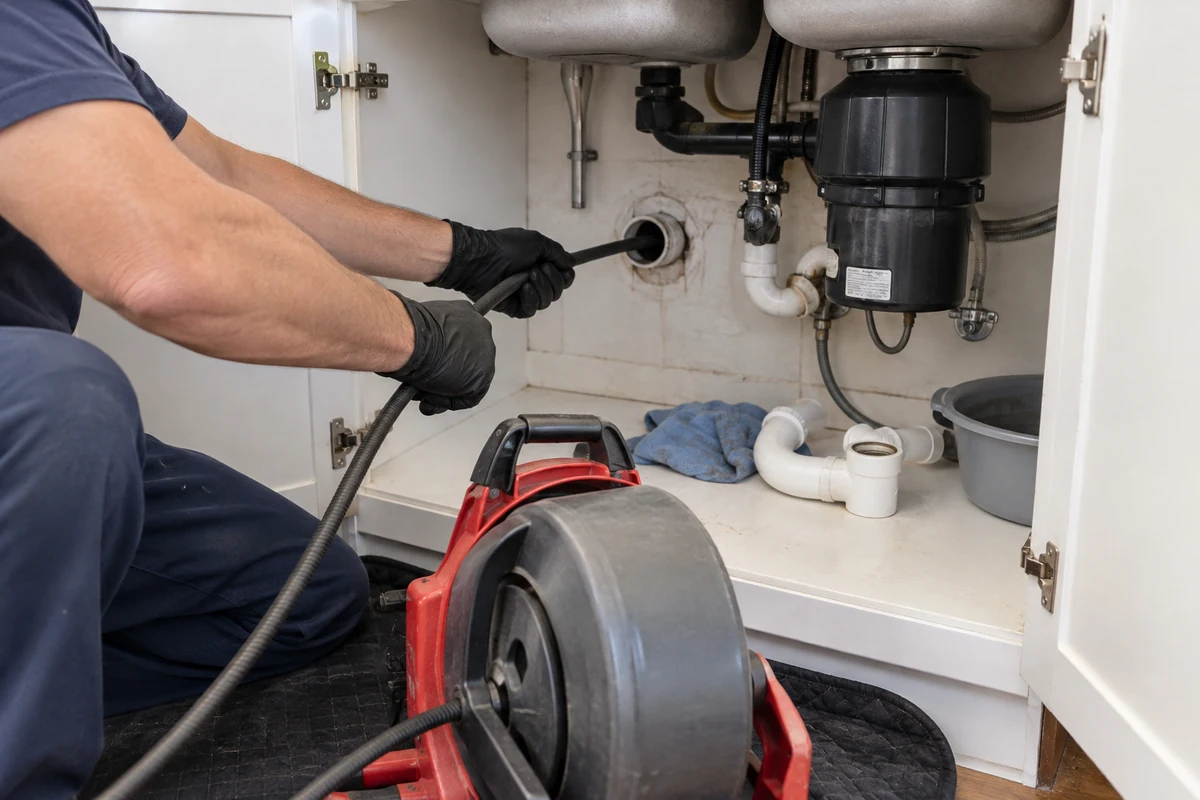
Our drain cleaning service clears household clogs using an approach suited to the fixture and line. A drain snake may open a blockage; hydro jetting may be recommended for suitable lines with heavier buildup. Recurring problems may need a sewer inspection to identify the cause before deciding on further cleaning or repair.
SoCal Rooter & HydroJet is based in La Verne and serves nearby communities including San Dimas, Claremont, Pomona, Glendora and Upland. Check the complete service area and contact our team to confirm availability at your address.
When you call, describe the issue, the fixtures affected and any earlier inspection or repair. We review the conditions, explain suitable options and discuss the estimate before work proceeds. Online requests require office confirmation.
WHAT TO EXPECT
Repeated blockages can indicate buildup, roots or pipe damage. Tell our team how often it happens and which fixtures are affected so we can discuss inspection and the next step.
No. One clogged fixture does not establish that the main sewer is damaged. Tell us whether other fixtures are affected and whether the problem returns after cleaning so the team can assess the appropriate next step.
You can describe the symptoms without choosing a method. Snaking may clear a fixture blockage; hydro jetting may be considered for heavier buildup in a suitable line. Recurring problems may require inspection before further work is recommended.
Describe the affected fixture and what happens when it is used: slow draining, a complete blockage or water appearing at another fixture. Mention whether nearby sinks, showers or toilets are also affected, and whether the problem started suddenly or gradually. Share any previous cleaning and how long it helped. These observations can help the team distinguish an isolated fixture issue from a possible problem farther along the drainage system, without assuming a diagnosis over the phone. Include your service address and access restrictions. Photos of the affected area may help explain the request, but do not replace an assessment of the line.
Clear movable belongings from around the affected fixture and from the route to any known cleanout. For a sink, make the surrounding area accessible and mention anything that cannot easily be moved. Tell the technician about drain products already used, previous attempts to clear the blockage and any known pipe repairs. Do not dismantle plumbing or open an unfamiliar cleanout just to prepare for the visit. Explain parking, gates, pets or tenant access arrangements when booking. If multiple fixtures are backing up, tell the office promptly so the request reflects the actual situation instead of being described as a single slow sink.
Record when the symptoms return and whether they involve the same fixture or additional drains. Contact the team with that history and ask whether further inspection is appropriate. Another blockage, material left elsewhere in the line or a pipe condition can require a different next step; recurrence alone does not identify the cause. Keep any previous findings or job notes available so the next assessment can build on them. Ask about everyday use that may contribute to the problem, including what goes into the affected drain. Avoid assuming that repeated cleaning is a complete solution when an underlying defect has not been evaluated.
PROJECT DETAILS FROM OUR CREW
See how descaling and hydro jetting prepared a restaurant sewer for four CIPP liners installed through one access point. View the project photo, video and scope.
Each project reflects its own pipe condition and access. Request an assessment for your property.
Open the topics that apply to your property. These planning notes help you discuss the work, compare the scope and prepare for the next step.
The first useful detail is where the problem appears. Tell SoCal Rooter whether it concerns a kitchen sink, shower, toilet or several fixtures. Drain cleaning should address the actual pattern rather than begin with an assumption that every blockage belongs to the main sewer. A clear description helps frame the assessment before a method is selected.
Explain whether water moves slowly, stops moving or appears somewhere else during ordinary use. These are different observations, and each deserves its own description. If more than one fixture is involved, note whether the events occur together or at different times. The relationship can be assessed without treating separate symptoms as a confirmed single cause.
Include when the condition was first noticed and whether it developed suddenly or gradually. If the timing is uncertain, say so. The date a rarely used fixture was checked may not be the date the problem began. An accurate history is more useful than a precise-looking timeline reconstructed from guesses about the concealed system.
For an intermittent concern, record ordinary occasions when the symptom appeared and when it was not observed. Do not deliberately create another backup to demonstrate it. The drain cleaning discussion can use a factual history while the professional considers the appropriate assessment, available access and work objective for the actual property.
If the situation changes after booking, update the office. Another fixture becoming affected or visible water appearing can make the current request different from the original description of a slow sink. Communicate the present condition first, then provide earlier notes as context. Gathering a perfect record should not delay reporting an active concern.
A service method is a means to a defined result. The initial objective may be clearing a fixture blockage, cleaning a particular section or obtaining information about a recurring concern. Ask how the proposed drain cleaning approach fits that objective. You can understand the recommendation without choosing equipment or operating settings yourself.
Snaking and hydro jetting should be considered in relation to the actual task, access and pipe condition. A familiar drain cleaning service name does not make the scope identical from one property to another. The provider should explain why the proposed approach suits the line and what result will be reviewed after the work.
Cleaning removes material; it does not by itself correct every damaged or displaced pipe. If findings raise a repair question, keep that recommendation distinct from the immediate cleaning task. A useful explanation identifies the condition, affected section and proposed next step instead of treating a broad service label as a complete answer to every symptom.
Tell the team about previous repairs or lining when you have that information. The actual completed record is more useful than a general statement that all pipes are new. One project may have addressed a limited section. The drain cleaning plan should account for documented history while recognizing which connected areas remain uncertain.
If the information available is incomplete, ask how that affects the first step. A staged assessment may be needed before a wider scope can be discussed. The important point is to understand what the proposed work will establish, what remains unknown and which decision follows, rather than expect certainty before the relevant conditions are assessed.
A repeated problem deserves a useful history, not just the phrase same clog again. Record the fixture, return date and ordinary use around the event. Keep the earlier completed section available. This lets the next drain cleaning discussion compare the current observation with the work actually performed rather than assuming an identical cause from similar symptoms.
If earlier service helped for a period, include that interval honestly. An improvement is useful information, but it does not prove the condition of every concealed area. Likewise, recurrence alone does not identify a structural defect. The assessment should connect the new recommendation to current findings and the relevant history of the line.
Ask whether further inspection would help answer the remaining question. The purpose and limits of that stage should be explained. A camera record can provide information about accessible sections, but an obscured or unavailable view should not be remembered as a complete condition report for the entire drainage system.
Keep an earlier recommendation separate from completed work. A repair estimate in your folder does not mean that repair took place. Clear status labels help the provider understand the actual history and avoid repeating an assessment based on an inaccurate belief that a particular section was already replaced or checked.
If another drain cleaning visit is proposed, ask what it is intended to achieve and how the result will be assessed. A maintenance or repeat-service recommendation should have a property-specific basis. It should not silently replace discussion of a separate condition that cleaning cannot correct or imply a guarantee that all future backups are prevented.
Share practical access details when arranging service. Gates, parking, occupied rooms and locked areas can affect how the visit is planned. Identify a known cleanout location without opening it yourself. The drain cleaning scope should reflect the access actually available, not an assumption that every part of the line can be reached in the same way.
Move ordinary stored belongings around an affected fixture only where doing so is safe. For a sink, explain anything fixed or difficult to move before attempting to alter it. Do not dismantle cabinetry or plumbing to prepare. The appropriate access method should follow the assessment and agreed work rather than an improvised homeowner opening.
Tell the technician about products already used and previous attempts to clear the problem. Describe what was done and whether the symptom changed. This is useful history even when an attempt did not help. Do not repeat the action to demonstrate it; provide the information so further work can be planned with accurate context.
For rentals, identify who provides entry and who can approve additional scope. An occupant may be able to describe the symptom without being responsible for a repair decision. Keep the authorized contact reachable. Clear roles help the drain cleaning visit proceed without relying on an unarranged approval from the person who happens to be present.
Ask what fixture-use instructions apply during the appointment and how occupants will receive the completion message. Nearby fixtures should not be assumed to have identical restrictions solely because of their location. The actual work plan should guide the practical instructions, with one current message shared by everyone using the affected area.
A useful drain cleaning estimate identifies the section and intended result. A focused fixture task and a broader line-cleaning proposal can describe different work even when both use the same service name. Ask for the boundary in ordinary language so the completed record can later be compared with what you understood was offered.
Check the included stages: assessment, cleaning, inspection and any supplied documentation. A viewing during the appointment, a saved recording and a written explanation are different deliverables. Clarify the arrangement rather than assume every proposal includes the same record or the same level of follow-up information for a later repair discussion.
Ask about access work and restoration if either may be relevant. Creating access, closing an opening and restoring a finish are not automatically included in a cleaning description. A clear handoff identifies which tasks the proposed service completes and which require another decision or provider, making the full project easier to plan.
If new findings change the plan, ask how the revised drain cleaning scope will be explained and approved. Keep the change with the original estimate. A final record should reflect the actual work, not only the first proposal after the objective or section has changed during assessment.
When comparing two drain cleaning offers, use the same categories rather than only the totals. Note the section, purpose, access, inspection and exclusions. Mark unclear items as questions instead of filling them with assumptions. The meaningful comparison is between the work described and its relationship to the findings at your property.
At completion, ask which section was addressed, what result was observed and whether a limitation remains. Improved flow and a recommendation for further assessment can both be accurate outcomes. The drain cleaning record should preserve that distinction rather than imply that every connected pipe was repaired or fully evaluated during the visit.
Keep the completed description with any supplied notes, photos or inspection information. Include the service address and date, especially when managing several properties. A recording without context may be difficult to interpret later. The useful folder explains the actual work and identifies recommendations still pending rather than only documenting that someone attended.
If another trade is needed for affected materials or finishes, identify the handoff. Plumbing work and restoration can have separate responsibilities. Ask what condition is included at the end of the service and who coordinates the next task. An unassigned follow-up should remain visibly unassigned until the appropriate contact accepts it.
If a new symptom appears, add a dated observation instead of rewriting the earlier outcome. Describe similarities and differences, including any other fixture now involved. The provider can compare the current concern with the completed section while assessing whether the same cause, another blockage or a separate condition needs attention.
Keep any practical use or follow-up instructions accessible to occupants. A property owner and a tenant should not be working from different understandings of the completed drain cleaning visit. Share the relevant information through the agreed contact, while retaining the detailed records for later questions that require more than a short handover summary.
For drain cleaning in La Verne, send the exact service address, affected fixtures and current symptoms through the appointment request. SoCal Rooter also serves nearby communities including San Dimas, Claremont, Pomona, Glendora and Upland. The office can confirm availability for the actual address and discuss the appropriate next assessment.
Start with a concise summary rather than a guessed repair request. Explain what happens, when it began and what previous work achieved. Supporting records can be available behind that summary. This helps the team understand the immediate concern without first sorting through unrelated documents or assuming a diagnosis from a short photograph description.
For a commercial or managed property, provide the coordination contact and any access window that affects the appointment. Identify the person who can review additional findings. The service arrangement should reflect the actual property use, with practical instructions communicated to affected occupants rather than left only with the person arranging the visit.
If you are uncertain about the sewer route or earlier work, state that clearly. An honest gap is more useful than a confident but incorrect history. The assessment can account for uncertainty and explain which next step will provide useful information, instead of planning from a repair boundary or pipe route that was never established.
An online drain cleaning request requires office confirmation. Include any meaningful change in conditions while the appointment is being arranged. Clear information about the present issue, relevant history and access gives the team a practical starting point for discussing service and an estimate suited to the property.
YOUR NEXT STEP STARTS HERE.
Ask us about service or scheduling. For urgent issues, call 909-969-1838.